
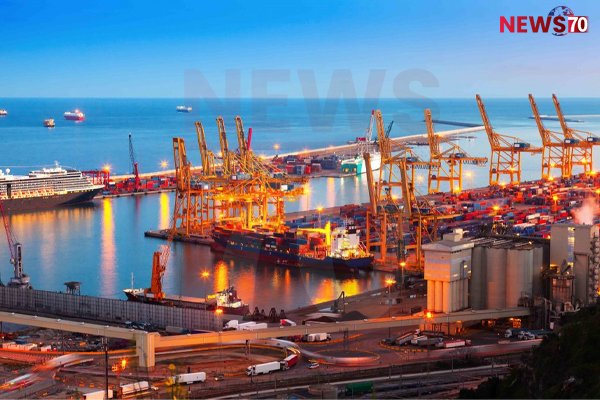
Bangladesh attracted $1.8 billion in logistics FDI between 2019-2024, accounting for just 4.9% of South Asia’s total. Despite major investments from Abu Dhabi Ports and AP Moller-Maersk, the country lags behind India and regional peers. Experts urge strategic planning, smart logistics technologies, and incentive packages to boost investment and enhance competitiveness.
Bangladesh Captures Less Than 5% of South Asia’s Logistics FDI: Report
Bangladesh attracted $1.8 billion in greenfield foreign direct investment (FDI) in the logistics sector between 2019 and 2024, representing just 4.9 percent of South Asia’s total, according to a report by GlobalData and the International Finance Corporation (IFC).
During this period, the country registered 10 projects in logistics and warehousing operations, in addition to receiving $185.6 million in FDI related to sales and administration functions connected to the logistics industry, the study noted.
Published on the Bangladesh Investment Development Authority’s website in June this year, the report highlighted key investments, including the UAE-based Abu Dhabi Ports’ $1 billion plan to construct a multipurpose terminal under the Bay Terminal project at Chattogram port. The study also cited Denmark-based shipping company AP Moller-Maersk’s $400 million investment to open a new container terminal in Laldia, Chattogram.
Despite these developments, Bangladesh’s share of logistics FDI remains far below India’s dominance. South Asia attracted a total of 258 logistics FDI projects, with India accounting for 85 percent of these investments.
The study emphasized that the global economy is evolving rapidly, influenced by politics, policy, and technology, and advised the Bangladeshi government to adopt a strategic approach. It recommended enabling and encouraging the development of logistics and infrastructure that can serve dual purposes—facilitating both international trade and the country’s expanding domestic market.
Green logistics solutions were also highlighted as a way to reduce environmental impact and align with sustainable investment trends, which could further attract FDI. The report suggested the government promote smart logistics technologies to reduce inefficiencies, including minimizing waste, cutting down documentation, and improving time management. This approach could address the “just-in-time versus just-in-case” challenges in supply chains.
The report further recommended focusing on attracting core logistics companies, e-commerce players, and food-related businesses, while emphasizing the textile sector as a strategically important area where Bangladesh already has a competitive regional advantage.
To remain competitive in the region, the study advised offering attractive incentive packages to companies seeking to establish logistics operations in the country. “Incentives have become a much more important factor in FDI in recent years,” it said, stressing the need to identify key source markets and target companies for investment.
Commenting on the findings, M Masrur Reaz, chairman and CEO of the Policy Exchange of Bangladesh, said, “Logistics is now absolutely critical for Bangladesh from two perspectives. As an export-led economy, our competitiveness depends on faster delivery to global markets and lower freight costs, both of which rely on efficient logistics.”
Reaz noted that Bangladesh lags significantly behind regional peers such as Vietnam, Thailand, and India in infrastructure, ports, storage, and transport services, limiting its global competitiveness. “Historically, Bangladesh has missed out on logistics FDI due to regulatory restrictions and underdeveloped sectoral capacity,” he added.
However, Reaz highlighted that a billion-dollar opportunity now exists to attract global players across ports, river terminals, multimodal transport, and inland container services. “Strategic investment can not only boost exports but also bring world-class logistics operators to Bangladesh, enhancing credibility and confidence in our investment landscape,” he concluded.