
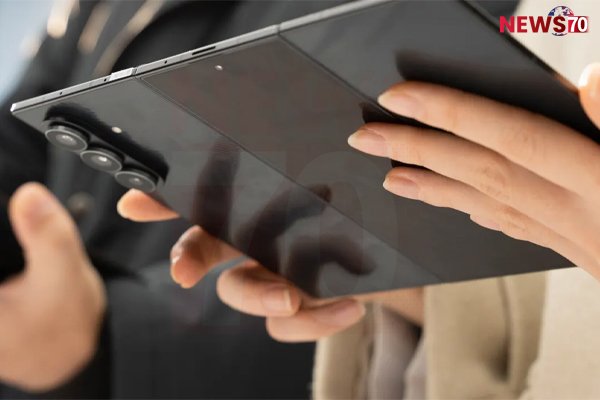
Samsung Electronics has launched its first multi-folding smartphone, the Galaxy Z TriFold, set for release in South Korea on Dec 12 and later in markets including the U.S., China, and UAE. The phone features two inward-folding hinges, a 10-inch display, 16GB RAM, 512GB storage, and super-fast charging. Designed as a technology pilot, it allows running three apps side by side and supports a desktop-like mode. The launch highlights Samsung’s efforts to maintain leadership in foldable devices amid rising competition from Chinese brands and an expected Apple entry.
Samsung Unveils First Multi-Folding Smartphone Amid Rising Competition from Chinese Brands
Samsung Electronics on Monday announced the launch of its first multi-folding smartphone, aiming to maintain its lead in foldable technology as competition from fast-growing rivals intensifies.
The highly anticipated Galaxy Z TriFold is set to go on sale in South Korea on December 12, with subsequent launches planned for China, Taiwan, Singapore, and the United Arab Emirates. The device will arrive in the U.S. market in the first quarter of 2026, with further details expected later, the company said in a press release.
The Galaxy Z TriFold will be offered in a single black variant, featuring 16GB of RAM and 512GB of storage, priced at 3,594,000 South Korean won ($2,449).
The smartphone employs two inward-folding hinges that open to reveal a 10-inch display — slightly smaller than the 11-inch display of Apple’s 11th-generation iPad — with a 2160 x 1584 resolution. When folded, the device measures 12.9 millimeters (0.5 inches) thick, compared to 12.1 mm for the Galaxy Z Fold6 and 8.9 mm for the latest Galaxy Z Fold7.
“Samsung’s first tri-fold model will ship in very limited volume, but scale is not the objective,” said Liz Lee, Associate Director at Counterpoint Research, emphasizing that the launch is designed as a technology pilot rather than a mass-market release.
Lee explained that with competitive dynamics expected to shift in 2026, especially with Apple reportedly entering the foldable smartphone segment, Samsung is positioning the TriFold to test durability, hinge design, and software performance while collecting real-world user insights ahead of broader commercialization.
The TriFold’s three foldable panels allow users to run three apps side by side vertically and support a desktop-like mode without requiring a separate display. The device also boasts Samsung’s largest battery capacity among foldable models and supports super-fast charging, reaching 50% in 30 minutes.
TM Roh, Samsung Electronics co-CEO and head of the Device eXperience division, stated that the Galaxy Z TriFold reflects years of innovation in foldable designs, balancing portability, performance, and productivity in a single device.
Samsung first entered the foldable smartphone market in 2019 and has remained an early innovator, although the segment has stayed relatively niche. Chinese competitors, including Huawei and Honor, have launched their own foldables internationally, offering competitive pricing and specifications. In September, Huawei introduced its second-generation trifold phone in China, measuring 12.8 mm when folded. Honor has also rolled out foldables in international markets after spinning off from Huawei in 2020.
Like other Samsung foldables, the TriFold carries an IP48 rating, making it water-resistant up to 1.5 meters for 30 minutes and offering limited protection against dust.
Analysts note that Samsung’s multi-fold launch underscores the company’s strategy to dominate the premium foldable segment while gathering crucial feedback on user behavior, software optimization, and hinge longevity. This approach could help Samsung refine mass-market foldables, particularly in the face of aggressive entries from Chinese brands and the expected Apple foldable. Early adoption of such devices in markets like South Korea, China, and the UAE is likely to influence design trends, app optimization, and ecosystem compatibility across foldable smartphones globally.