
European diplomats and business leaders have urged Bangladesh to increase imports from the EU to help reduce the bloc’s large trade deficit, especially after Dhaka agreed to narrow its trade gap with the US under a reciprocal tariff deal. At a BIDA dialogue in Dhaka, EU representatives pressed for deeper reforms in customs, logistics, standards, and regulatory enforcement to attract more European investment. Ambassadors from multiple EU countries highlighted the need for transparency, predictable regulation, improved governance, and faster approvals. With Bangladesh nearing LDC graduation, the EU is pushing for GSP+–aligned reforms, while businesses seek smoother operations amid port delays and regulatory inconsistencies. Officials say two-way investment, technology transfer, and sectoral cooperation will be key as Bangladesh targets $100 billion in exports by 2030.
European diplomats and business leaders have urged Bangladesh to expand its imports from the European Union (EU) to help reduce the bloc’s substantial trade deficit with Dhaka.
The appeal comes as the matter has taken on new significance after Bangladesh agreed to narrow its trade imbalance with the United States under a reciprocal tariff arrangement.
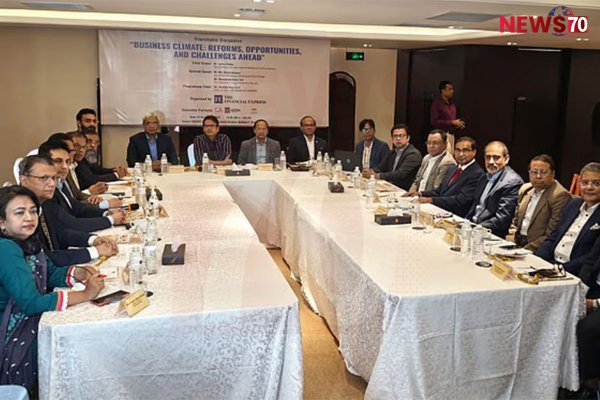
During a joint dialogue on the business environment held at the Bangladesh Investment Development Authority (BIDA) office in Dhaka on Monday, EU representatives also pressed Bangladesh to deepen reforms in critical areas as part of efforts to strengthen trade and investment ties.
At the opening of the event, EU Ambassador to Bangladesh Michael Miller noted that both sides are moving toward an investment partnership intended to benefit each other, stressing that its success will depend on cooperation, fair competition, and unbiased enforcement of rules.
Participants from both government and business circles said European companies are seeking a more even trading structure, especially since Bangladesh has already assured Washington that it will purchase more American products—including soybeans, wheat, aircraft, LNG, and machinery—in return for comparatively lower 20% reciprocal tariffs.
In this context, EU missions and businesses are expecting similar commitments, insisting that imports of European machinery, chemicals, and other goods must increase if the existing imbalance is to be corrected.
As a collective market, the EU remains Bangladesh’s biggest export destination for goods. Bilateral merchandise trade totaled €22.2 billion in 2024, with the EU recording a deficit of €17.5 billion, European Commission figures show.
Garments and textiles made up nearly 94% of EU imports from Bangladesh in that year. On the other hand, machinery and appliances accounted for 35% of EU exports to Bangladesh, followed by chemical products at 23%.
In the services sector, bilateral trade reached €2 billion in 2023, with the EU enjoying a €0.8 billion surplus. Combined trade in goods and services stood at €23.9 billion in the same year.
EuroCham Bangladesh Chairperson Nuria Lopez said European businesses and diplomatic missions are aligned in their aim to scale up foreign direct investment (FDI) and reduce the trade gap as Bangladesh transitions out of the least developed country (LDC) category next year.
She highlighted the need for wide-ranging reforms—including in customs, logistics, standards, regulatory enforcement, and import processes—pointing to case studies shared during the session.
EU private sector representatives added that regulatory predictability, transparency, and digitalization are key for Bangladesh to attract high-quality European investment and emerge as a competitive manufacturing hub, according to a EuroCham Bangladesh statement.
Several European ambassadors echoed these concerns.
Dutch Ambassador Joris van Bommel emphasized the need for stable, transparent, and predictable regulation and called for promoting a “modern image” of Bangladesh to unlock possibilities in water, agriculture, and logistics.
Danish Ambassador Christian Brix Moller referred to experiences from G2G and PPP initiatives, urging better governance systems, quicker resolution of regulatory delays, and timely approvals.
Italian Ambassador Antonio Alessandro pointed to opportunities in industries such as ceramics, leather, and design, underscoring the importance of innovation, technology exchange, and fostering SME participation.
Spanish Ambassador Gabriel Sistiaga Ochoa de Chinchetru reaffirmed the EU’s role as a dependable partner and pressed for greater stability, rule of law, and fair competition.
Swedish Ambassador Nicolas Weeks cited Sweden’s strong connection to Bangladesh’s garment industry and its push for sustainable fashion, calling for clearer regulatory frameworks.
French Ambassador Jean-Marc Séré-Charlet underlined the long-term benefits of deepening European partnerships and urged stronger governance actions and better profit repatriation processes to unlock trade and FDI potential.
German Acting Ambassador Anja Kersten praised ongoing reforms but stressed the need for steady implementation, improved vocational training, an updated double taxation treaty, and initiatives to bolster Bangladesh’s global reputation.On the government side, Chittagong Port Authority Chairman Rear Admiral SM Moniruzzaman described modernization work underway—such as digitalization, the Bay Terminal, and the Laldia project—which aims to accommodate larger vessels and support round-the-clock port operations.
BIDA Executive Chairman Ashik Chowdhury said structural reforms, improved investor dispute resolution, and annual “result cards” are being prioritized, adding that Bangladesh aims to attract greater European investment for local and regional operations.Lutfey Siddiqi, special envoy on international affairs to the chief adviser, emphasized the urgency of a defined reform roadmap and proactive engagement with the EU ahead of Bangladesh’s LDC graduation.
The push from European diplomats reflects growing competition between major trading partners—especially as the US, China, and the EU all seek stronger economic footholds in Bangladesh, one of Asia’s fastest-growing economies.As Bangladesh prepares to lose duty-free access to the EU after its LDC graduation, Brussels is increasingly focused on ensuring regulatory upgrades that match the standards of its GSP+ scheme.
European businesses have also been advocating for improved ease of doing business, citing delays in customs clearance, port congestion, lengthy approval processes, and inconsistent policy enforcement as obstacles to investment.With Bangladesh targeting $100 billion in exports by 2030, officials say diversifying import sources, modernizing manufacturing, and adopting advanced European technology could help build more value-added industries.Analysts note that the call for balanced trade does not imply reducing Bangladeshi exports but rather increasing two-way investment, technology transfers, and broader sectoral cooperation with the EU.