
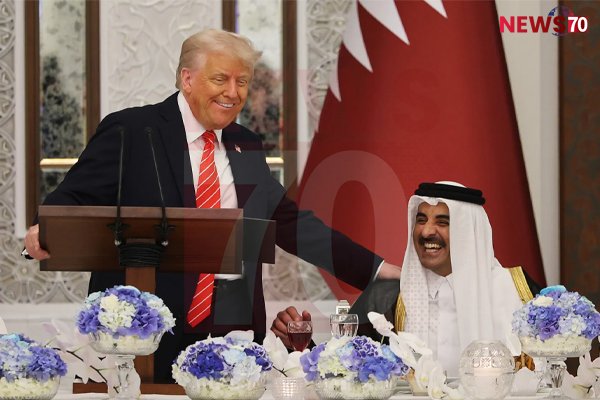
President Donald Trump has signed an executive order pledging U.S. defense of Qatar, including military action if necessary, after Israel’s strike on the Gulf nation killed six people. The order assures Qatar’s security and territorial integrity but raises questions about its legal scope. Qatar remains a key U.S. partner, hosting Al Udeid Air Base, while the Israeli attack and Saudi-Pakistan defense pact reshape Gulf security dynamics.
Trump Signs Executive Order Pledging Defense of Qatar After Israeli Strike
DUBAI, United Arab Emirates (AP) — President Donald Trump has signed an executive order committing to defend Qatar, even with U.S. military action if necessary, following Israel’s surprise strike on the Gulf state.
The order, dated Monday but published on the White House website Wednesday, underscores Washington’s promise to guarantee Qatar’s “security and territorial integrity” against external threats. It comes just days after Israeli forces launched an attack on Qatar that killed six people, including a Qatari security officer, as Hamas leaders in Doha were considering a Gaza ceasefire proposal.
“The United States shall regard any armed attack on the territory, sovereignty, or critical infrastructure of Qatar as a threat to the peace and security of the United States,” the order declared. It added that the U.S. would take “all lawful and appropriate measures — diplomatic, economic, and if necessary, military — to defend the interests of the United States and Qatar and to restore peace and stability.”
Trump signed the order during Israeli Prime Minister Benjamin Netanyahu’s visit to Washington. The White House said Trump arranged a call between Netanyahu and Qatari leaders in which the Israeli premier expressed “deep regret” over the incident.
Qatari officials have not yet commented, though Al Jazeera, Qatar’s state-funded network, highlighted the announcement with the headline: “New Trump executive order guarantees Qatar security after Israeli attack.”
Analysts caution that the scope of Trump’s pledge remains unclear. While treaties typically require U.S. Senate approval, presidents have often entered agreements independently, as Barack Obama did with Iran’s 2015 nuclear deal. Any potential U.S. military action, however, ultimately depends on presidential discretion.
Qatar, a wealthy gas-rich nation and home to the U.S. Al Udeid Air Base, is already a key American partner. In 2022, then-President Joe Biden designated Qatar a major non-NATO ally for its role in assisting during the U.S. withdrawal from Afghanistan.
The Israeli strike has also reshaped regional security dynamics. Saudi Arabia has since signed a mutual defense pact with Pakistan, bringing the kingdom under Islamabad’s nuclear umbrella. Observers now wonder whether other Gulf states, uneasy about Israel and wary of Iran amid renewed UN sanctions, will pursue similar guarantees with Washington.
“The Gulf’s centrality in the Middle East and its importance to the United States warrants stronger guarantees beyond President Trump’s verbal assurances and diplomatic gestures,” said Bader al-Saif, a Gulf affairs analyst and professor at Kuwait University.