
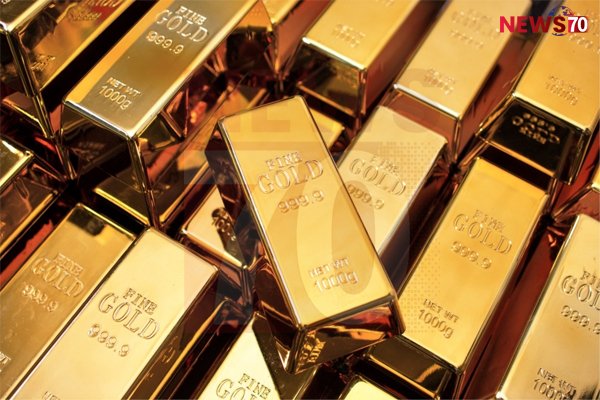
Gold prices slipped after reaching record highs, as a stronger US dollar and cautious investor sentiment ahead of key US inflation data weighed on the market. Analysts view the dip as a normal correction after a strong 2025 rally, but remain bullish long-term due to central bank buying and geopolitical uncertainties. Spot gold fell 0.2% to $4,084/oz, while US futures hovered near $4,100/oz. Short-term movements depend on upcoming CPI data and Fed commentary.
Gold Prices Slip After Hitting Record Highs Amid Dollar Strength and US Data Caution
Gold prices eased on Thursday (October 23) following a record surge earlier this week, as investors turned cautious ahead of key US economic data. A stronger dollar also weighed on market sentiment.
Temporary Pause Following a Strong Rally
Gold has climbed nearly 56% in 2025, surpassing the $4,000 per ounce mark for the first time in October. Analysts describe the latest dip as a normal correction after an extended rally.
Brian Lan, Managing Director at GoldSilver Central, said, “We’ve seen a correction that is normal after the recent rally, and there’s still some downside pressure. In the longer term, we remain bullish, but investors should stay cautious in the short term.”
As of Thursday morning, spot gold fell 0.2% to $4,084 per ounce, while US futures hovered near $4,100 per ounce.
The US dollar’s recent strength has made gold more expensive for non-dollar holders. The dollar index rose 0.2% against major currencies, limiting demand.
In India, the world’s second-largest gold consumer, prices stood at roughly ₹12,508 per gram for 24K gold and ₹11,465 for 22K gold, reflecting global weakness.
Traders are eyeing the upcoming US Consumer Price Index (CPI) report, delayed to Friday (October 24) due to the government shutdown. The report is expected to show core inflation steady at 3.1% in September, providing clues on the Federal Reserve’s next move.
Markets have largely priced in a 25-basis-point rate cut at the Fed’s upcoming meeting. Gold typically benefits from lower interest rates, which reduce the opportunity cost of holding non-yielding assets like bullion.
Gold’s rally this year was supported by geopolitical tensions, rate-cut expectations, and central bank buying. Recent signs of easing global conflicts have slightly reduced safe-haven demand.
US President Donald Trump hinted at progress in US-China trade talks and is scheduled to meet Chinese President Xi Jinping next week. While the administration imposed fresh sanctions on Russian oil firms, it also indicated potential mediation between Russia and Ukraine.
According to Manav Modi, Analyst – Precious Metals Research at Motilal Oswal Financial Services, recent fluctuations reflect profit-taking and technical factors.
He said, “No major fundamental has changed; the market is just finding equilibrium as riskier assets see renewed buying. Panic selling and margin calls at elevated levels have triggered short-term volatility.”
Analysts suggest gold may consolidate in the near term but remains structurally strong due to continued central bank purchases, geopolitical uncertainties, and expectations of further monetary easing.
Short-term price movements will largely depend on the upcoming US inflation data and Fed commentary next week.