
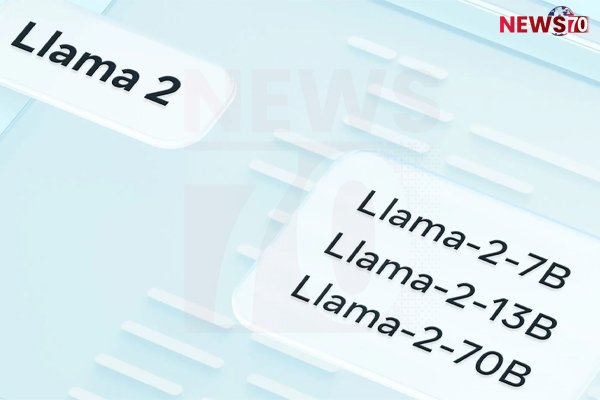
Meta and Microsoft have launched Llama 2, a powerful family of open large language models designed to democratize AI. Announced at Microsoft Inspire, the partnership makes Llama 2 available on Azure and Windows, enabling developers to build, customize, and deploy generative AI solutions at scale. Llama 2 is free for research and commercial use, supporting global innovation in AI.
Meta and Microsoft Launch Llama 2 to Usher in a New Era of AI
Tech giants Meta and Microsoft have unveiled Llama 2, a new family of large language models (LLMs) set to transform the artificial intelligence (AI) landscape. The announcement, made at the highly anticipated Microsoft Inspire event, drew widespread attention from industry leaders and marked the beginning of a new chapter in AI innovation.
At the heart of the partnership is a mission to democratize AI, giving developers and organizations worldwide access to its benefits. With Llama 2, developers can build generative AI applications and experiences that promise to reshape industries and redefine how people work.
Meta’s open strategy led to Microsoft being chosen as the exclusive partner for Llama 2’s commercial release. Through Azure, Microsoft’s powerful cloud platform, developers can fine-tune and deploy the 7B, 13B, and 70B-parameter Llama 2 models in a secure and scalable environment.
The collaboration builds on the two companies’ long-standing relationship in AI and further strengthens Microsoft’s role as a leader in AI supercomputing. Azure’s purpose-built infrastructure, combining cutting-edge hardware, software, and cloud capabilities, is designed to handle the most demanding AI workloads with ease.
With Llama 2 now part of the Azure AI model catalog, developers can quickly discover, customize, and deploy advanced AI models without managing complex infrastructure. The catalog, currently in public preview, streamlines access to powerful pre-built models at scale.
Microsoft is also bringing Llama 2 directly to Windows, making it possible for developers to integrate generative AI into their applications seamlessly. Using tools like Windows Subsystem for Linux (WSL), Windows Terminal, Visual Studio, and VS Code, developers can fine-tune LLMs to fit their customers’ specific needs.
Azure AI customers will gain the ability to test Llama 2 with their own data, leveraging advanced techniques such as prompt engineering and retrieval augmented generation (RAG) to optimize outputs and ensure safer, more reliable user experiences.
Importantly, Llama 2 is free for both research and commercial use, opening new opportunities for innovation and collaboration across industries.