
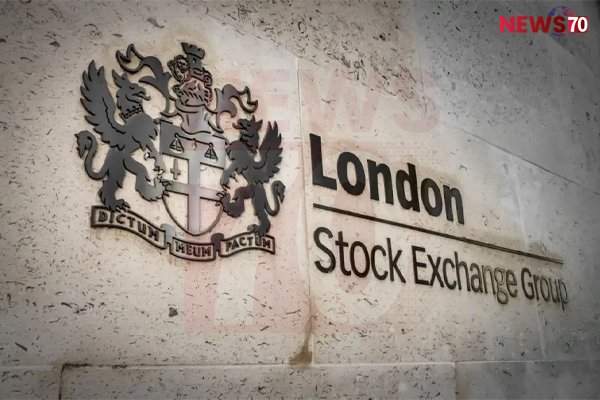
Metlen CEO Evangelos Mytilineos says the UK is now the most attractive place to list shares, praising the London Stock Exchange’s recovery after Brexit. Despite high energy costs hurting European industries, he believes London offers better cultural and business alignment than the US. Mytilineos criticized UK and EU energy policies for being unsustainable and lacking honesty about the true cost of the green transition. He also expressed optimism about improved UK-EU relations and potential cooperation on trade and defense.
UK ‘Most Attractive’ Market for Listing, Says Metlen CEO
The United Kingdom emerged as the most attractive destination for listing shares of the global energy and metals firm Metlen, according to its founder and chief executive, Evangelos Mytilineos.
Speaking to the BBC, Mr. Mytilineos said “the tide was turning” for London’s financial markets after a difficult post-Brexit period when the London Stock Exchange (LSE) was viewed as less appealing.
His optimism contrasts with broader concerns over the steady migration of major companies away from UK markets — many now favoring listings in the United States.
However, Mr. Mytilineos acknowledged that high energy costs continue to challenge both European and UK industries, arguing that politicians have not been transparent about the financial burden of the energy transition.
Metlen, which employs nearly 10,000 people across 40 countries, moved its primary listing from Athens to London in August this year. Valued at more than £5 billion, the firm became the fastest company ever admitted to the FTSE 100, the index of Britain’s most valuable publicly listed businesses.
The relocation followed an exodus of major UK-based firms from the LSE in recent years. Tech giant ARM Holdings is now listed in New York, Flutter Entertainment (the parent of Paddy Power) has shifted focus to the US, and mining giant BHP moved its primary listing to Australia. Meanwhile, speculation continues about the future listings of Shell and AstraZeneca, the UK’s most valuable company.
Mr. Mytilineos admitted that he considered the potentially higher valuations offered by American exchanges but concluded that London was a better cultural and business fit.
“Most of our executives started their careers in England,” he said. “They feel at home in the UK. A large portion of our operations are based here, and the rest are in Europe — not much connection with the US.”
He added that US exchanges were “overcrowded,” explaining, “I don’t think we would get the same level of interest in our company over there.”
According to Mytilineos, the LSE appeared ‘neglected’ after Brexit, but rival European financial hubs such as Frankfurt, Paris, Milan, and Amsterdam had failed to take advantage.
“Having withstood a difficult period, I think London is on course to reclaim its place at the top,” he said.
Energy Policy and Industry Struggles
The Metlen CEO was far less complimentary about UK and European energy policies, which he said are vital to his industry. “A bit of metal is essentially energy in solid form,” he explained.
As president of Eurometaux, Europe’s association for non-ferrous metals, Mr. Mytilineos said that high energy costs compared to the US have devastated the sector.
“The energy situation in the UK and Europe is simply not viable for industry,” he said. “We have hundreds of members, and many of the most electro-intensive companies have gone out of business over the past three years — all because of energy prices. They just cannot compete.”
He emphasized that while he supports the green transition, political leaders have not been honest about its true costs.
“When politicians asked, ‘Do you want us to move full speed ahead on the Green Revolution?’, most companies said yes,” he said. “But the real question should have been: are you willing to spend 30% of your salary over the next 30 years on this transition? The answer might have been very different.”
The Politics of Energy Transition
Mr. Mytilineos said rising energy bills in the UK and Europe have made US political messaging on the issue increasingly appealing.
He pointed to a recent speech by former US President Donald Trump at the United Nations, in which Trump dismissed climate change as “the greatest con job ever perpetrated on the world” and rejected renewable energy.
“That kind of rhetoric influences a lot of people globally,” Mytilineos said. “In Europe especially, we may begin to see right-wing parties blocking more and more measures related to the energy transition.”
He called for a more honest and transparent debate about the challenges ahead.
“We must assess society’s needs, the means available, and how to achieve our goals,” he said. “Let’s sit down and discuss how much money we have and how much can be spent on infrastructure. If we don’t explain this clearly to people, resistance will only grow.”
Trade Relations and Future Outlook
Despite his criticism, Mr. Mytilineos expressed confidence that the UK and EU could reach a deal over steel tariffs. The European Union is proposing a 50% tariff from June next year on all steel imports from outside the bloc, including the UK.
He said cooperation in areas like defense had improved relations between London and Brussels.
“My impression from Brussels is that the climate toward the UK is much friendlier than it was three to five years ago,” he said. “Britain’s willingness to support Europe on defense has created a much warmer atmosphere to strike agreements on trade and other issues.”