
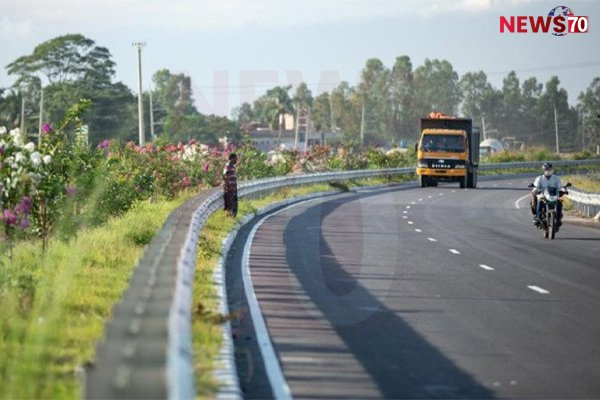
In the past year, 6,420 people were killed on Bangladesh’s roads, with women, children, pedestrians, and drivers’ assistants accounting for 61.6% of fatalities. Motorcycle accidents caused 38% of deaths, mostly due to reckless driving by young riders. Most crashes occur on national and regional highways, caused by speeding, poor road design, slow-moving vehicles, and weak traffic enforcement. Dhaka Division remains the deadliest region. Experts urge dedicated motorcycle lanes, pedestrian pathways, stricter enforcement, and infrastructure reforms to reduce road accidents.
Over 6,400 Killed on Bangladesh Roads in One Year, Women, Children, and Pedestrians Most Vulnerable
A total of 6,420 people lost their lives on Bangladesh’s roads over the past year, with 48 percent of the fatalities involving women, children, and pedestrians. The data covers the period from October of last year to September this year, highlighting the growing national road safety crisis.
According to a 12-month analysis by the Road Safety Foundation, drivers, their assistants, and other vulnerable road users face the highest risk, reflected in the elevated fatality rates. Motorcycle-related accidents accounted for the largest share of deaths.
Over the same period, 12,528 people were injured and 6,437 road crashes were reported nationwide. Of the total deaths, 908 were women, 871 were children, and 1,322 were pedestrians, together representing 48.3 percent of all fatalities. Drivers and their assistants accounted for 855 deaths, meaning that these four groups combined make up nearly 61.6 percent of all road fatalities.
Experts warn that these figures underscore a failure of Bangladesh’s current road safety framework to protect its most vulnerable citizens. Road accidents, once considered isolated incidents, have now become a serious national public safety issue.
Motorcycles: The Deadliest Vehicles
Motorcycle accidents remain the single deadliest type of vehicle-related crash. Over the 12-month period, 2,699 motorcycle accidents caused 2,448 deaths, accounting for 38.1 percent of all road fatalities. In other words, nearly two out of every five road deaths involve a motorcycle, largely due to reckless driving by young riders.

Causes and Accident-Prone Areas
The Road Safety Foundation’s analysis also identifies key accident hotspots and causes. 70 to 80 percent of crashes occur on national and regional highways, attributed mainly to excessive speed, slow-moving vehicles obstructing traffic, poor road design, and weak enforcement of traffic regulations.
Transport expert Professor M. Shamsul Hoque of BUET emphasized the urgent need for strict motorcycle regulation, dedicated motorcycle lanes, and separate pedestrian pathways to prevent further casualties. He also highlighted the challenges outside urban areas, where markets and encroachments along highways exacerbate accident risks.
The foundation notes that driver error, including losing control of vehicles, accounts for 40 to 50 percent of crashes, with incompetence or physical/mental unfitness also contributing significantly.
Dhaka Division Remains the Most Dangerous
Statistical data show that Dhaka Division experiences the highest number of accidents and fatalities, largely due to the concentration of vehicles, heavy human movement, weak traffic management, and widespread disregard for road laws. The division’s roads have increasingly become death traps for commuters, pedestrians, and public transport users.

Neglected Recommendations for Safer Roads
Experts have repeatedly proposed solutions to the government through the Road Safety Foundation, but many remain unimplemented. Recommended measures include:
1.Expanding skilled driver training programs
2.Implementing fixed wages and working hours for professional drivers
3.Strengthening the capacity of the Bangladesh Road Transport Authority (BRTA)
4.Enforcing traffic laws strictly for drivers, transport workers, passengers, and pedestrians
5.Restricting slow-moving vehicles on highways and constructing separate service roads
6.Installing road dividers along all highways gradually
7.Eliminating extortion in public transport
8.Improving rail and waterway systems to reduce road congestion
Professor Hoque stresses the importance of a humane and sustainable approach to infrastructure development, particularly focusing on highway markets, pedestrian safety, and dedicated lanes for motorcycles, to significantly reduce road accidents and fatalities.